Origin
Houston
- 49 CFR
- PHMSA
- FMCSA
- IMDG
Trade lane
Dangerous-goods ocean exports from Port Houston to Germany, from container stuffing and terminal acceptance through destination-port handover.
Updated 2026-08-13.
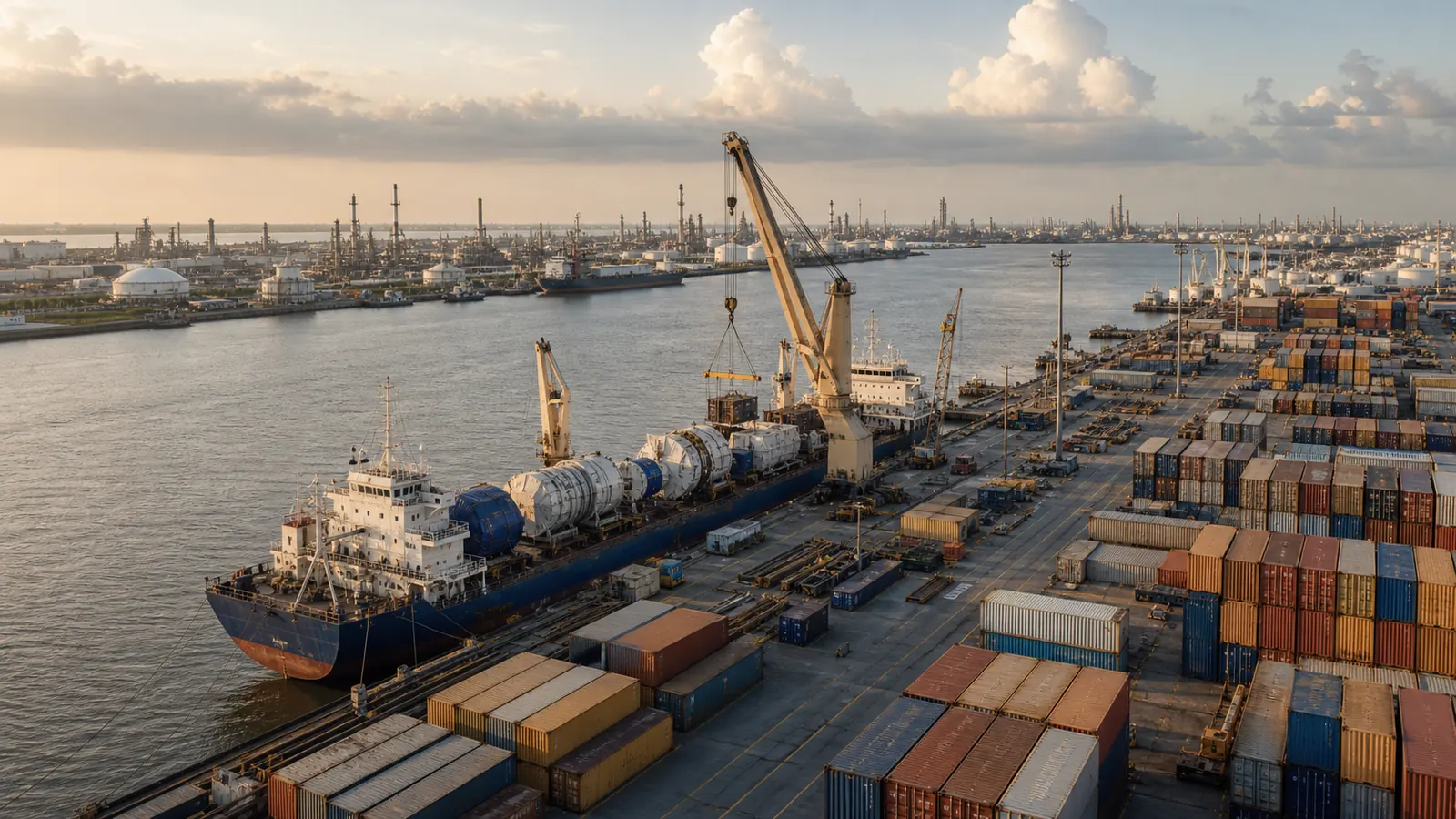
Editorial route illustration; not a record of a specific hansa express movement.
Origin
Destination
The endpoint frameworks above are a regulatory baseline, not proof of carrier, terminal or shipment acceptance. Those are checked for the actual cargo before booking.
This is a sea-export service from an agreed Houston marine gateway. Hansa Express does not collect cargo by road or rail inside the United States. The shipper or a separately contracted licensed US carrier delivers the cargo to the agreed stuffing or port location.
Our file begins with the UN number, class, quantity, container details, Port Houston terminal and destination port. Those details are used to secure ocean carrier and terminal acceptance before the container is tendered.
We stuff the export container and coordinate the marks, labels and placards required for the confirmed ocean movement. The dangerous-goods declaration, export documents and booking data are reconciled before terminal delivery.
For Class 1, terminal delivery windows can be narrower than the vessel cut-off. The stuffing date, export release, terminal window and vessel position therefore belong to one schedule.
The booking must identify the accepting terminal, carrier, vessel, UN entry and quantity. General port capability is not shipment acceptance, and a schedule is not permission to tender dangerous goods.
The accepted container moves by sea under the IMDG Code. Any transshipment port is included in the acceptance chain and must remain suitable after a schedule change.
The scope continues through the agreed destination-port handover. Customs, receiving permissions and any movement beyond that port must be arranged separately by the customer or its destination agent.
A useful enquiry names the US port, destination port, cargo classification, quantity, container type and requested sailing window.
Send the cargo details, quantity and target date. We will confirm the viable gateways and approvals for the actual consignment.