Origin
Trade lane
Dangerous goods shipping from Middle East to Europe
A westbound planning guide for regulated cargo from Gulf and Middle Eastern hubs into Europe, separating origin certification, international acceptance and EU entry.
Updated 2026-08-13.
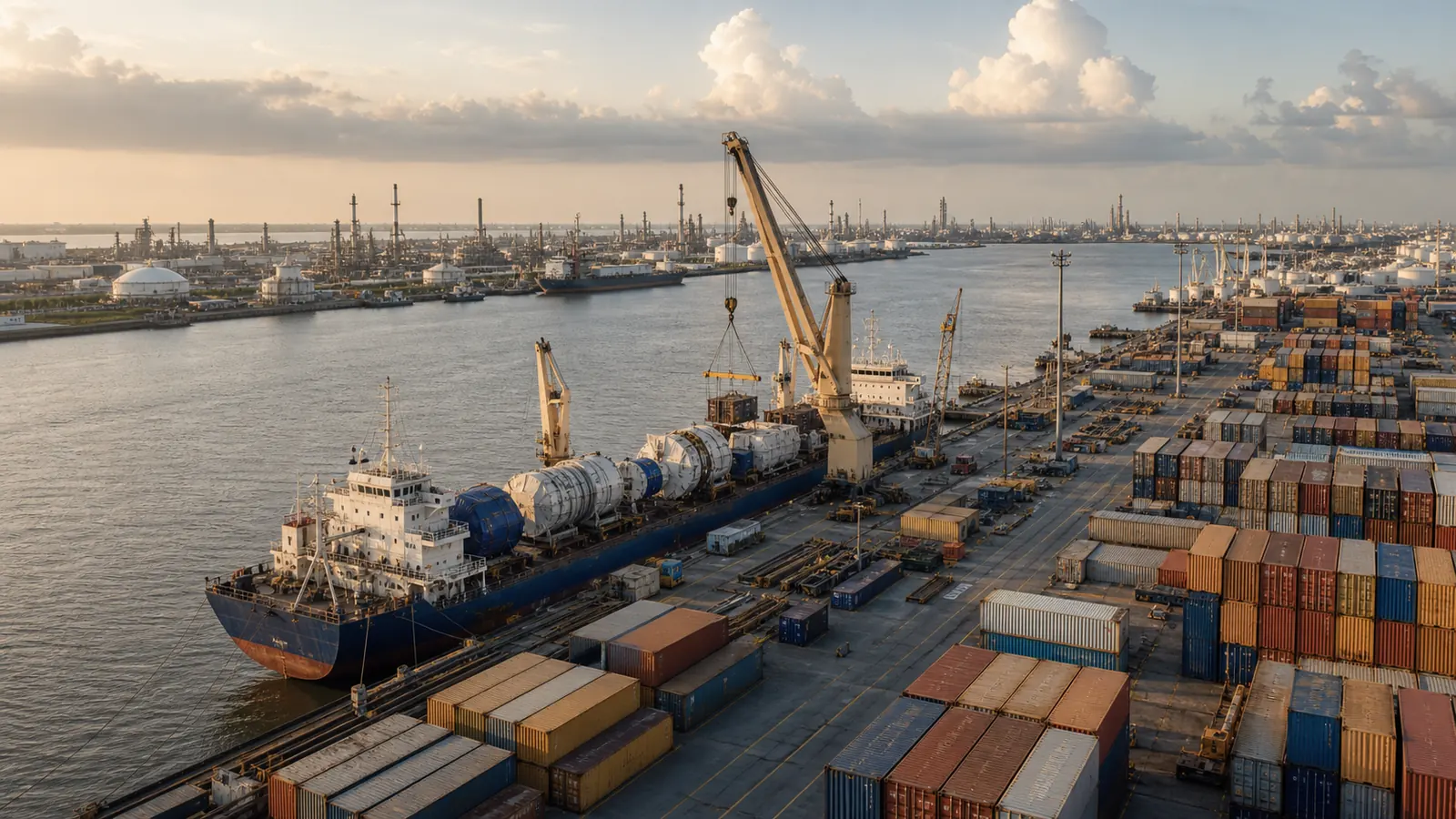
Editorial route illustration; not a record of a specific hansa express movement.
Lane snapshot
Destination
Europe
The endpoint frameworks above are a regulatory baseline, not proof of carrier, terminal or shipment acceptance. Those are checked for the actual cargo before booking.
Operational facts for this lane
- Origin authority
- National dangerous-goods and export requirements apply in addition to the international modal code.
- UAE example
- UAE-originating air dangerous goods are subject to GCAA CAR Part VI and certified-entity requirements.
- Sea route
- IMDG governs packaged dangerous goods, while each port, terminal and carrier retains acceptance control.
- EU arrival
- Advance security data and a customs procedure are required independently of dangerous-goods release.
- European final leg
- ADR and destination-country permits govern road delivery after entry.
Resolve the origin state and shipper
The Middle East is not a single dangerous-goods jurisdiction. An offer from the United Arab Emirates, Saudi Arabia, Qatar or another state begins under different national laws, competent authorities and export procedures. The legal shipper, packer and forwarder must be identified in the actual country of departure, not described only as a regional office.
The UAE illustrates the point: the GCAA aligns air transport with ICAO but adds national certification and oversight. Comparable local checks exist elsewhere. A regional hub may have excellent network connectivity while still refusing a specific UN entry, class, quantity or transfer arrangement.
Sea and air require different preparation
For sea freight, IMDG classification, approved packaging, marks, container packing and the dangerous-goods declaration must be ready before terminal delivery. Gulf heat, short terminal windows and limited dwell for some cargo can influence packing and collection timing. A transshipment via another hub creates a second acceptance point that belongs in the booking record.
For air, ICAO eligibility, State variations, operator variations and aircraft type determine the route. Cargo-aircraft-only goods cannot be moved simply because a passenger connection exists. The operator and ground handler should accept the exact shipment, and any national approval or exemption must cover the intended itinerary.
European entry and customs
The first EU port or airport requires advance safety and security information. Customs entry then places the goods under an import or transit procedure. Those steps do not replace an explosives, defence, radioactive-material or chemical-control licence held by the consignee in the destination country.
If the cargo enters through Belgium or the Netherlands for delivery in Germany, both the customs transit and the physical ADR movement need owners, documents and timing. The arrival terminal should not become unplanned storage while a destination permit is completed.
Build the operational file
A complete enquiry includes the origin facility, exporter, UN number, proper shipping name, class or division, compatibility group where relevant, package approvals, quantity, dimensions, temperature limits, end user and destination permit. For project cargo, include lifting and handling constraints rather than assuming containerized handling.
The resulting plan should name the accepting origin gateway, carrier, transit points, EU entry gateway, customs representative and inland carrier. It should also state which details remain subject to written acceptance. That is the difference between a useful corridor plan and a search-oriented place-name page.
Sources and verification
- UAE GCAA — dangerous goods oversight https://www.gcaa.gov.ae/en/departments/asi/aviation-security-affairs
- ICAO — Dangerous Goods Technical Instructions https://www.icao.int/Dangerous-Goods/Technical-Instructions
- ICAO — current State variations https://www.icao.int/Dangerous-Goods/State-Variations
- IMO — International Maritime Dangerous Goods Code https://www.imo.org/en/ourwork/safety/pages/dangerousgoods-default.aspx
- European Commission — importation and Entry Summary Declarations https://taxation-customs.ec.europa.eu/customs/customs-procedures-import-and-export/importation_en
- UNECE — ADR 2025 https://unece.org/info/Transport/Dangerous-Goods/pub/395786
Planning Middle East to Europe?
Send the cargo details, quantity and target date. We will confirm the viable gateways and approvals for the actual consignment.